No matter what industry they’re used in, pipes need to be secure. Whether pipes are used to carry food and beverage ingredients, oil and gas, chemicals, or water for irrigation systems, they have to be held together as effectively as possible. This is what makes pipe nipples such critical elements of process piping and industrial infrastructure.
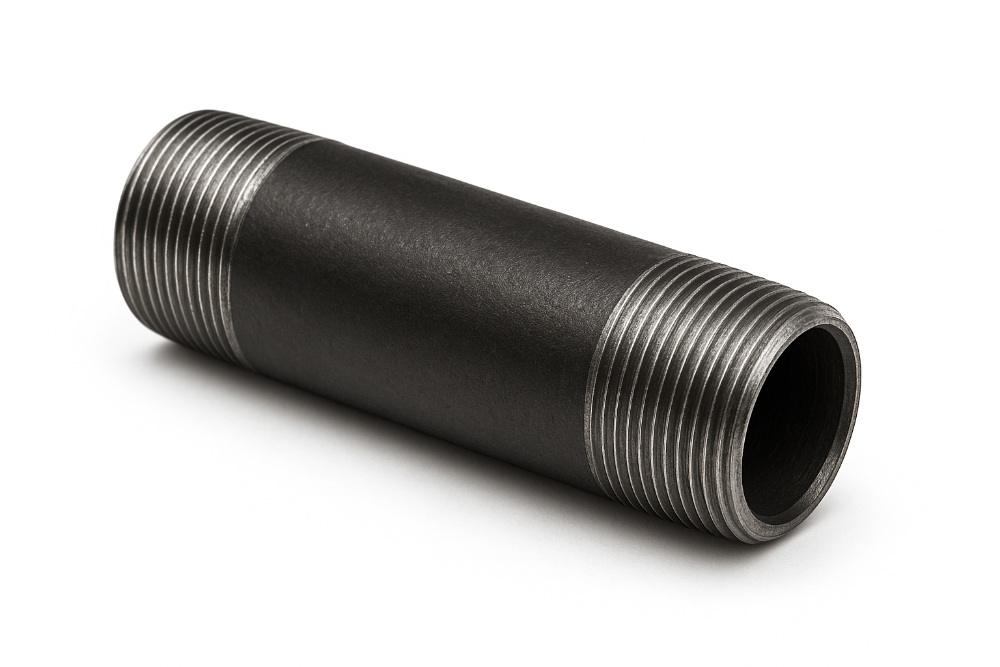
Generally speaking, pipe nipples are fittings or sections of pipe used to connect piping components, valves, fittings, or equipment. Most feature male-threaded connections on one or both ends, although plain-end, grooved, and other custom-fabricated configurations are also available. While pipe nipples may appear straightforward, they are available in a wide variety of materials, schedules, lengths, and end configurations. Understanding these differences is critical for selecting the right pipe nipple for your piping system, which is why we’ve put together this guide.
Material Options for Pipe Nipples
One of the first decisions when selecting a pipe nipple is the material. Pipe nipples can be manufactured from a variety of alloys, including carbon steel, galvanized steel, stainless steel, brass, and aluminum. Pipe nipples may also be made from welded or seamless pipe. Welded pipes are commonly used in general industrial applications, while seamless pipes are often specified for higher-pressure or more demanding service conditions. The right material depends on the application’s corrosion resistance, durability, pressure, temperature, and compliance requirements.
Diameter, Length, and Pressure Options for Pipe Nipples
After selecting the material, the next step is determining the proper diameter, length, and wall thickness.
Pipe nipples are available in a wide range of sizes and lengths, from close nipples and standard cut lengths to custom lengths approaching a full-length piece of pipe. Selecting the proper diameter is critical for achieving the desired flow rate and maintaining system performance, while the correct length ensures proper fit-up within the piping assembly.
Wall thickness, commonly referred to as pipe schedule, plays a major role in performance. Common pipe nipple options include Schedule 40, Schedule 80, Schedule 160, and XXH. As wall thickness increases, the pressure capabilities of the piping system generally increase as well.
Thread Type and Connection Options for Pipe Nipples
The most common pipe nipple configuration is Threaded Both End (TBE), but several connection styles are available depending on the installation requirements.
- Threaded Both End (TBE): The standard pipe nipple configuration, featuring male threads on both ends. TBE nipples are commonly used to connect fittings, valves, equipment, and sections of pipe in threaded piping systems.
- Threaded One End (TOE): Features threads on only one end. TOE nipples are often used in tanks, vessels, and fabricated assemblies where one end requires a threaded connection while the other end is welded or permanently attached.
- Close Nipples: Threaded nearly their entire length, allowing connected fittings to cover most of the nipple. These are commonly used in tight spaces where minimizing overall assembly length is important.
- Plain-End Pipe Nipples: Manufactured without threads and commonly used in welding applications, press fitting systems, and fabrication projects where threaded connections are not required.
- Grooved Pipe Nipples: Feature precision-cut grooves that allow them to be joined using mechanical couplings. Grooved nipples are frequently used in fire protection, HVAC, and industrial piping systems where quick installation and maintenance are priorities.
The most common threading standard in the United States is National Pipe Tapered Thread (NPT). These threads are tapered to provide a watertight seal when two lengths of pipe or fittings are screwed together. Elsewhere in the world, pipes may be manufactured using the British Standard Pipe Taper (BSPT) threading. Because thread quality directly impacts sealing performance, quality pipe nipples should be manufactured and inspected using calibrated thread gauges to verify compliance with NPT standards. Poorly cut threads can lead to leaks, installation difficulties, damaged fittings, and premature system failures.
Finish and Custom Fabrication Options
The final consideration is whether the pipe nipple requires a specific finish, coating, or value-added fabrication service.
Common options include:
- Galvanized finishes
- Chrome plating
- Pre-sealed threads
- Special threading
- Drilling and tapping
- Deburring
- 45-degree cuts
- Weld-end beveling
- Engraving and stamping
These options can reduce field labor, improve installation efficiency, and ensure the pipe nipple arrives ready for the application.
Selecting the Right Pipe Nipple Type for Your Needs
When determining the proper pipe nipple type for your specific application, it’s important to consider the material, pipe construction, diameter, length, schedule, threading requirements, pressure requirements, installation method, finish, and any compliance considerations that may influence the choice.
A quality pipe nipple starts with quality pipe, accurate length tolerances, and properly gauged threads. These factors help ensure reliable installation, leak-free performance, and long-term durability in the field.
MOPIPE offers a wide range of pipe nipples in various sizes, materials, and configurations to match virtually any setup you may have. Our team of experts have the knowledge necessary to ensure you find the components and fittings that make the most sense for the application or help you create custom pipe nipples for unique requirements. To learn more about what we have to offer, reach out and connect with a member of our team today.